This week, we tested one of the installation’s core interactions for the first time: fireflies that detect visitors and follow their movements through the forest.
Simulating the Depth Sensor
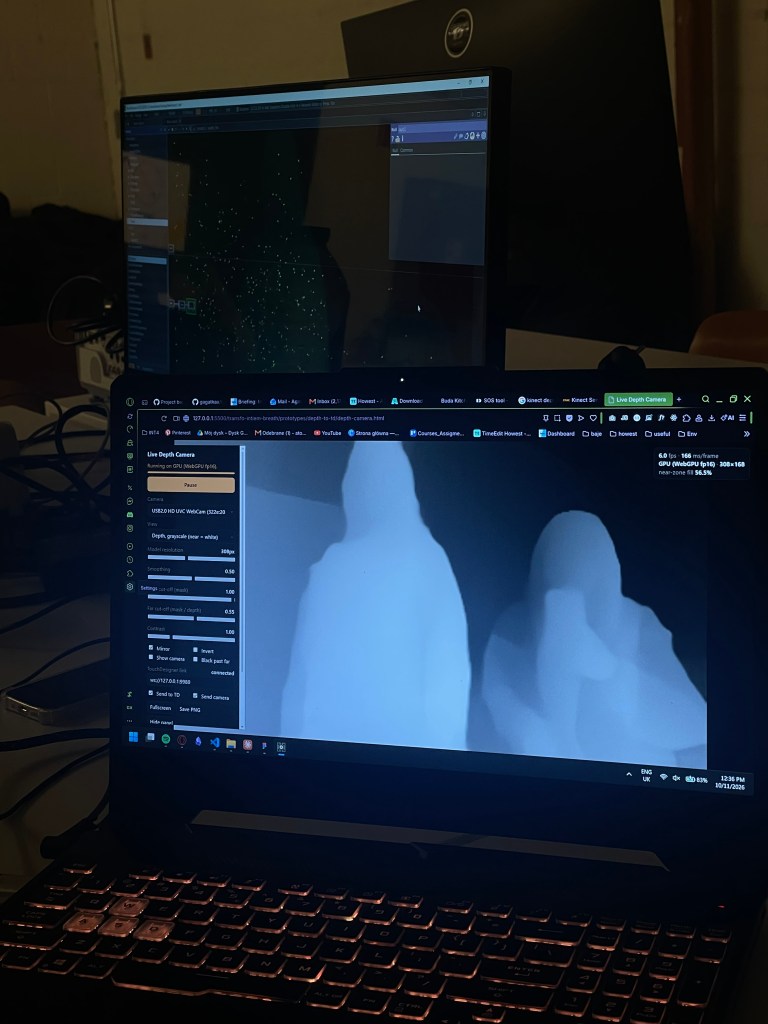
The final installation will use a depth sensor to track visitors as they move through the space. Since we don’t have the sensor yet, we needed an alternative to test the interaction.
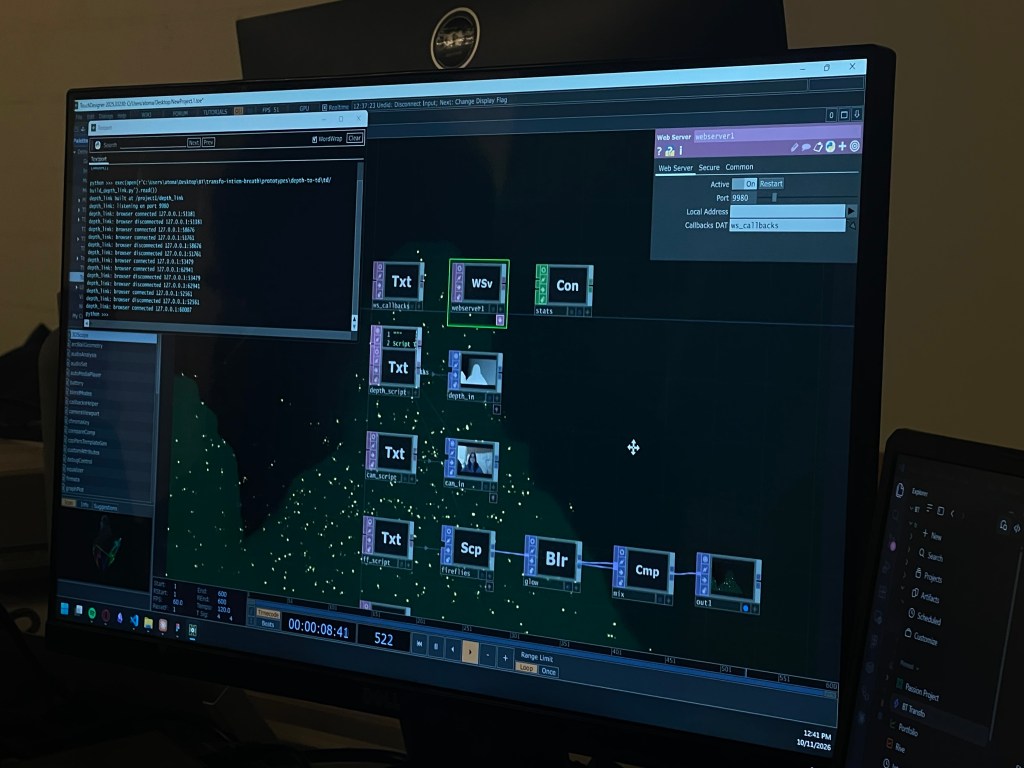
We used a regular laptop camera combined with an AI-based person detection model. It identifies people in the camera feed and estimates their position. This information is then sent to TouchDesigner, where the fireflies respond to their movements.
Although this isn’t a true depth sensor, it provides enough positional information to simulate the interaction and test how naturally the fireflies respond to visitors.
First Successful Test
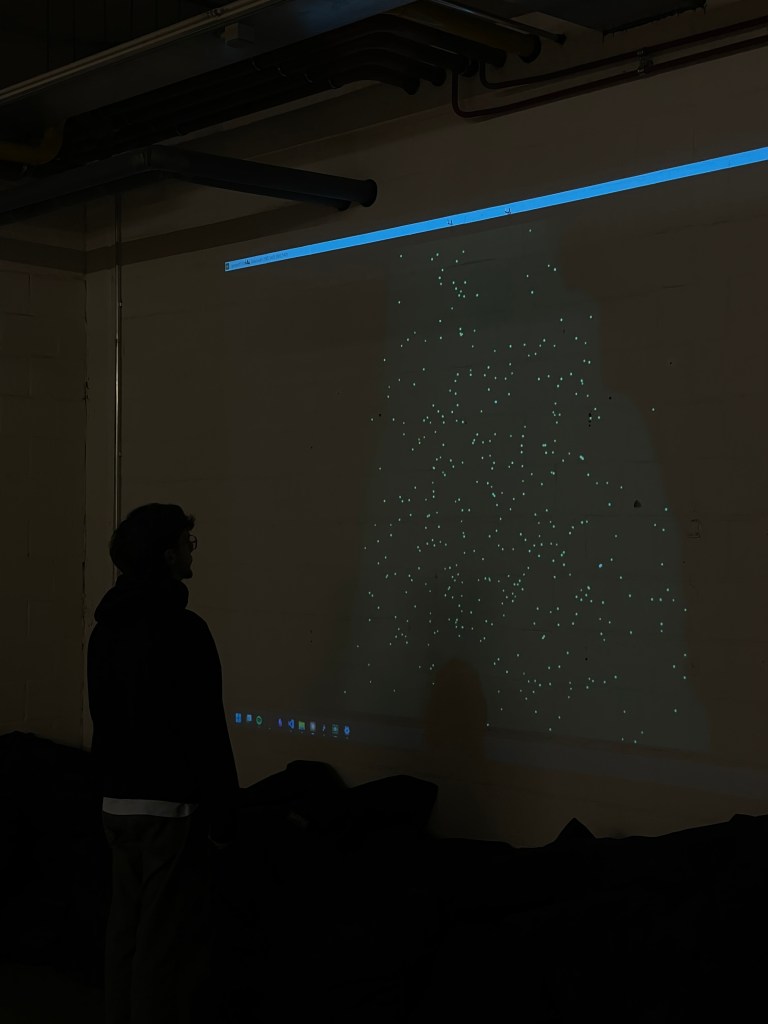
The test worked. The system detected a person in front of the camera, and the fireflies followed as they moved.
Seeing the interaction come together for the first time was an important milestone. We now have a working tracking setup in TouchDesigner that we can continue developing and eventually connect to the actual depth sensor.
There are still several things to investigate: how quickly the fireflies should react, how many should follow each visitor, and how the system should behave when multiple people enter the space simultaneously.
Rethinking the Physical Interaction
We initially planned to hang flowers from the ceiling, but after considering the height of the Pompenzaal, we realised this wouldn’t be practical. We decided to move away from the ceiling installation and explore interactions at floor level instead.
Interactive Floor Pads
Our current direction is to develop interactive floor pads that visitors can activate by stepping on them. Each pad would contain a pressure-sensitive mechanism connected to an Arduino and covered with a cushioned surface. When activated, it would trigger a response in the forest.
However, designing a mechanism that works reliably for everyone presents a challenge.
A five-year-old child and an adult apply very different amounts of pressure. The mechanism needs to be sensitive enough for a child to activate, while remaining strong enough to withstand the weight of adults and repeated use.
We’re therefore exploring alternatives to standard buttons, including mechanical systems such as levers and pedals. These could distribute pressure more effectively and offer a more durable solution.
Reliability is particularly important because the installation needs to run continuously for five hours. Visitors will interact with it in unpredictable ways, including children jumping on the pads. The mechanisms must withstand repeated use without compromising the experience.
Next Steps
- Continue refining visitor tracking and firefly behaviour in TouchDesigner.
- Build an initial floor pad prototype using buttons and cushioning.
- Compare buttons, levers and pedals in terms of sensitivity, durability and reliability.
- Test the mechanisms with different weights and levels of pressure.
- Investigate how the interaction can accommodate visitors with different mobility needs.
The next stage is to bring the digital and physical interactions together, making sure both are responsive, accessible and robust enough for the final installation.

