After the client pitch, we went deeper into each part of the project and started our first experiments.
The goal
The pitch showed what we wanted to make. These two sprints were about finding out who exactly we are designing for, which technology can do what we need, and what the forest should look like.
Tasks
| Dates | Task | Who |
|---|---|---|
| 4 – 16 Nov | Empathy map | Rafaela |
| 4 – 16 Nov | Personas | Rafaela |
| 4 – 16 Nov | Accessibility checklist | Rafaela |
| 4 – 16 Nov | Plan the first prototype test | Rafaela |
| 4 – 16 Nov | Fireflies in TouchDesigner | Agata |
| 4 – 16 Nov | Test the output on the free TouchDesigner licence | Agata |
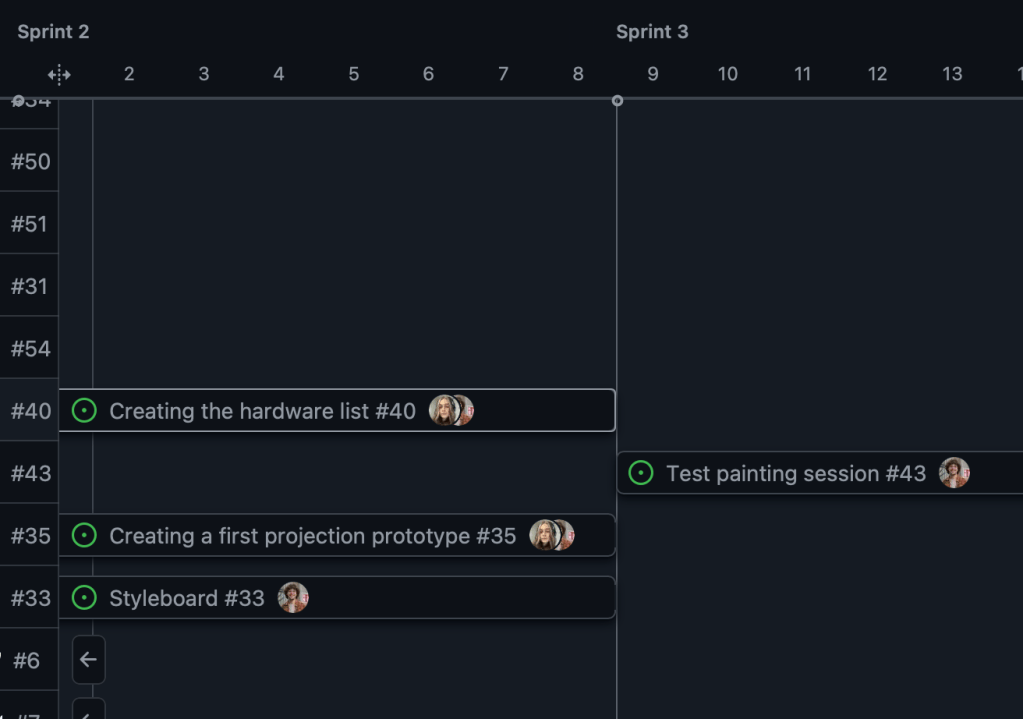
| 4 – 16 Nov | Hardware list with prices and delivery times | Agata, Jan |
| 4 – 16 Nov | First projection prototype | Agata, Jan |
| 4 – 16 Nov | Styleboard | Jan |
| 10 – 16 Nov | Test painting session for the trees | Jan |
What came out of it
UX: The empathy map and personas helped us picture the people walking into our forest: families with young children, older visitors and groups of friends. The accessibility checklist made sure we think about reach, light and safety from the start, not at the end.
Development: We built a makeshift depth camera from a regular camera, so we could start on the fireflies before the real depth sensor arrived. The fireflies already followed a person as they moved. We also checked whether the free TouchDesigner licence is enough for our projection, and listed the hardware we need with prices and delivery times, so we could order early.
Design: The styleboard and the first painting session set the look of the forest: a dark, painterly night forest with bright fireflies.

